
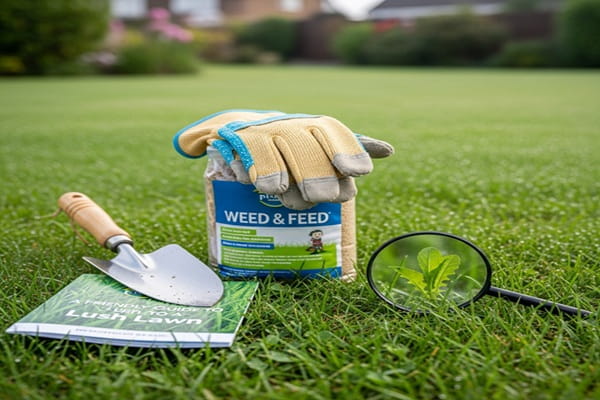
Alright, let’s talk weeds and grass but mostly weeds, because they somehow think your lawn is their personal playground. You’ve probably stared at shelves filled with “weed and feed” bags, wondering which one will actually work without turning your lawn into a crispy disaster. Trust me, I’ve been there, holding a bag and thinking, “Do I feed the grass or poison the weeds? Or both?”
This guide is your friendly companion through the confusing world of weed and feed. I’ll tell you what works, what to avoid, and how to choose the best weed and feed for your unique lawn. Think of it like chatting with a neighbor over the fence casual, honest, and with a little humor sprinkled in.
What Weed and Feed Really Does
Let’s start with the basics. What exactly is weed and feed?
-
Feed: It fertilizes your lawn, giving it nutrients like nitrogen to grow thick, green, and strong.
-
Weed: It kills broadleaf weeds (like dandelions and clover) and sometimes grassy weeds (like crabgrass).
Instead of buying two separate products, you get one bag that promises to do both. Sounds perfect, right? Well, not all products are created equal, and the wrong choice can leave you with yellow spots or stubborn weeds that laugh at you.
Weed and Feed Basics: What You Must Know
Timing is Everything
Applying at the wrong time is like showing up to a party a day late you’ll miss the fun. Most products work best when the grass is actively growing:
-
Spring: Great for most types of grass.
-
Early fall: Ideal for cool-season grasses.
-
Avoid hot summer or dormant lawns: The chemicals either won’t work or can burn your lawn.
Pro tip: Apply to a wet lawn. The herbicide sticks better, and weeds absorb it faster. And yes, wait to mow for at least 24 hours after applying your lawn deserves a little TLC.
How It Works
Weed and feed products are basically a two-in-one deal:
-
Herbicide (Weed Killer): Targets weeds while leaving grass mostly unscathed.
-
Fertilizer: Gives your grass the nutrients it needs to grow stronger than ever.
Think of it as giving your lawn a protein shake while putting the bullies in detention.
The Best Weed and Feed Products
After testing a few and talking to experts (and my extremely judgmental neighbor), here are some top picks.
1. Scotts Turf Builder Weed & Feed
-
Why it rocks: Kills broadleaf weeds, feeds your lawn, works on multiple grass types.
-
My take: This is my personal go-to. It’s reliable and gives consistent results without requiring an advanced degree in lawn science.
Perfect for: Homeowners who want a strong, green lawn without fuss.
2. BioAdvanced 5-in-1 Weed & Feed
-
Why it rocks: Handles over 200 weeds, feeds your lawn, and prevents new weeds.
-
My take: If you’ve got persistent weeds or a yard that seems cursed, this one’s your friend.
Perfect for: Lawns that need heavy-duty weed control plus a nutrient boost.
3. Spectracide Weed & Feed (Liquid)
-
Why it rocks: Ready-to-spray, fast-absorbing nutrients, easy application.
-
My take: I love this for small or awkwardly shaped lawns no spreader needed.
Perfect for: Homeowners who hate dragging around heavy bags of granular feed.
4. Scotts Turf Builder Triple Action
-
Why it rocks: Controls weeds, prevents crabgrass, feeds grass.
-
My take: Crabgrass is the arch-nemesis of summer lawns. This triple-action formula keeps it in check.
Perfect for: Springtime applications and crabgrass prevention.
5. Pennington Full Season Weed & Feed + Crab Control
-
Why it rocks: Affordable, kills weeds, prevents crabgrass, feeds grass.
-
My take: It doesn’t cover as much ground per bag, but for small to medium lawns, it’s budget-friendly.
Perfect for: Lawn owners on a budget who still want good results.
How to Choose the Right Weed and Feed
Not every lawn is the same. Here’s what to consider:
Grass Type
Warm-season grasses (Bermuda, Zoysia) respond differently than cool-season grasses (bluegrass, fescue). Choose a product suited to your grass type.
Weed Type
Know your enemy! Broadleaf weeds like dandelions are easier to kill than grassy weeds like crabgrass. Some products only target certain weeds.
Lawn Size & Bag Coverage
A cheap bag that covers a small area might actually cost more per square foot. Don’t just grab the cheapest option.
Season
Apply when the lawn is actively growing. Late spring and early fall are usually best.
Tips for Applying Weed and Feed
-
Apply to damp grass. Granules stick and work better.
-
Use the right spreader settings. Labels exist for a reason.
-
Target weeds when they’re actively growing.
-
Water lightly if the label recommends.
-
Don’t mow right away. Let the product do its magic.
Ever sprayed a product all over and watched weeds pop back anyway? Most of the time, it’s not the product it’s the timing and technique.
Also Read : Tractor Supply Sales Associate Job Description: A Friendly, Detailed Guide
Organic Alternatives
Not keen on chemicals? You’ve got options:
-
Corn gluten meal: Prevents new weed seeds from sprouting.
-
Organic fertilizers: Builds soil health and supports grass growth without harsh chemicals.
Note: Organic solutions are gentler but slower-acting. You’ll need patience and persistence.
Common Myths About Weed and Feed
-
“It kills all weeds.” – Nope, effectiveness varies by weed and product.
-
“Apply anytime, it’ll work.” – Timing is crucial.
-
“One application fixes everything.” – Lawns require consistent care.
Sometimes, a spot treatment plus a separate fertilizer can give better results than one combined product.
Final Thoughts
Weed and feed products are powerful tools, but only if used correctly.
-
Know your grass type.
-
Know your weeds.
-
Apply at the right time.
-
Follow label instructions.
Pick a product that fits your needs, and with proper care, your lawn can be lush, green, and almost free of weeds the envy of the neighborhood.
And remember, a beautiful lawn isn’t magic. It’s a little knowledge, the right product, and yes, some patience.