Ever noticed barbacoa on a menu and wondered what exactly it is? Maybe you saw it listed under tacos and thought, “Is that just barbecue spelled weird?” Trust me you’re not the only one. That exact confusion happened to me the first time I ordered it at a taqueria, and I was blown away by not just how delicious it was, but how rich its story turned out to be.
So let’s talk barbacoa what it really means, where it came from, how it’s made, and why folks can’t stop obsessing over this melt-in-your-mouth meat.
What Is Barbacoa?
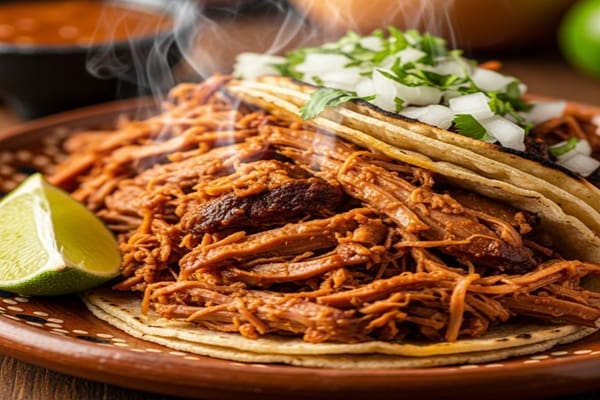
Barbacoa refers to both a style of cooking meat slowly and the meat itself after it’s cooked. The word comes from the Spanish barbacoa, which is related to the English word “barbecue,” and it originally described a method of cooking meat over a wooden rack or pit. Today, when most people talk about barbacoa, they mean tender, slow-cooked meat that’s shredded and packed with flavor.
In Mexico, barbacoa is a celebrated traditional dish usually made with:
-
Beef
-
Lamb
-
Goat
-
Sometimes even mutton
(Merriam-Webster definition: barbacoa refers to slow-cooked meat prepared like this in Mexico.)
A Culinary Definition
According to major dictionaries, barbacoa is “a style of cooking meat by applying low heat for a long time, especially over an open fire or in a pit.” It’s not just a quick grill it’s a marathon of flavor and patience.
The Fascinating Origin Story
You might be surprised that barbacoa didn’t start in Mexico, at least not in the way we know it today. The name can be traced back to the Taíno people of the Caribbean, where the term originally described a wooden rack used to smoke and slow-cook meat. Spanish colonists brought that idea into their own culinary traditions, and over time it evolved as it spread across regions.
But here’s where it gets really interesting: in Mexico, barbacoa became its own thing. Instead of just cooking over open flames, cooks developed a technique of digging a pit in the ground, lining it with heated rocks, covering the meat (often wrapped in maguey or banana leaves), and letting it steam-roast for hours. That process produces super tender meat that just falls apart.
Ever wondered why barbacoa tastes so tender? That long, slow cook does the trick.
Barbacoa vs. Other Similar Dishes
Barbacoa gets confused with a few other dishes that also use slow-cooked meat. Two big ones are barbecue and birria.
Barbacoa vs. Barbecue
At first glance, the words look the same… but the dishes aren’t identical.
-
Barbacoa traditionally refers to the Mexican style of low, slow cooking especially in a pit and the meat is served shredded and juicy.
-
American barbecue usually refers to grilling or smoking meat over indirect heat, with rubs or sauces that vary by region.
So while both involve cooking meat slowly, their techniques and flavor profiles differ.
Barbacoa vs. Birria
These two get mixed up all the time I’ve even confused them in taco shops before but they’re distinct:
-
Barbacoa is slow-cooked meat served mostly dry or with consomé (the meat’s rich broth).
-
Birria is a richer, soupier stew, often served in a bowl with the sauce and spices mixed in.
So yes, they both involve slow-cooked meat, but they differ in presentation and flavor. Barbacoa’s juices are often served on the side, giving you that light but delicious broth to sip or dunk your tortillas in.
Traditional vs. Modern Barbacoa
When old-school cooks in Mexico make barbacoa, they often go all out:
-
Meat is placed in a pit dug into the earth, heated with wood fire and hot stones.
-
The pit gets lined with agave leaves (sometimes banana leaves if agave isn’t available), which seal in moisture and add a subtle earthy aroma.
This method can take most of the day and is often reserved for special occasions or community gatherings.
But let’s be honest most of us aren’t digging pits in the backyard. Thankfully, modern adaptations bring barbacoa into your kitchen using:
-
Slow cookers
-
Ovens
-
Pressure cookers
You still get intense flavor and that melt-apart texture and you don’t need to become a backyard djf (digging fire hole) expert.
What Kind of Meat Is Used?
Beef is the most common barbacoa choice in the United States often using cuts like beef cheeks, chuck roast, or brisket.
In Mexico, traditional options include:
-
Goat
-
Lamb
-
Mutton
-
Even whole animals in some regions
Different meats bring different levels of richness and flavor. For example, goat and lamb have a deeper, gamier profile that many purists adore.
Ever eaten a lamb barbacoa taco? If not, you’re officially missing out.
The Flavor That Makes Barbacoa Barbacoa
Barbacoa isn’t just about slow cooking it’s about seasoning. A typical barbacoa marinade includes:
-
Guajillo and ancho chiles (smoky, fruity, not too spicy)
-
Garlic and onions
-
Mexican oregano
-
Spices like cinnamon, allspice, or cumin
That combo gives the meat its bold, layered flavor delicious on its own or wrapped in tortillas.
How to Serve Barbacoa
Once your barbacoa is ready, you can enjoy it a bunch of ways. Here are some classic serving ideas:
-
Tacos with fresh corn tortillas
-
Tortas (Mexican sandwiches) with onions, cilantro, beans
-
Burritos or quesadillas with rice and salsa
-
With a side of consomé the rich broth from the meat
-
Even on rice or in casseroles
People love barbacoa for its versatility. I once made it and ended up with three leftover meals tacos one night, burritos another, and god-tier sandwiches the next day.
It’s basically a meal that keeps on giving.
Regional Variations That Make Barbacoa Special
Mexico is huge, and barbacoa varies from place to place. For example:
-
Hidalgo is famous for its goat barbacoa cooked underground.
-
Northern Mexico may have beef versions more common on tortas.
This regional diversity is one of the reasons barbacoa feels like a cultural experience, not just a dish.
Also Read : Kenneth MyGreenBucks .Net – Platform Review & Financial Insights
Fun Barbacoa Facts
Here are some tasty tidbits you might not know:
-
In some Mexican towns, barbacoa is a community event, brought out during celebrations and even record-breaking taco days.
-
Chipotle actually had to rename its barbacoa burrito to “braised beef barbacoa” because many customers didn’t know what it was. Go figure!
-
Some U.S. regions, like Texas, are known for serving barbacoa beef cheeks and locals get very specific about how they love it cooked.
Barbacoa at Home: Simple Tips
You don’t need a pit to enjoy barbacoa. Here’s how home cooks make it accessible:
Step-by-Step Home Version:
-
Season and marinate your meat overnight for best flavor.
-
Slow cook in a crockpot or oven on low heat for hours.
-
Shred the meat with forks once tender.
-
Serve warm with tortillas, onions, cilantro, lime, and salsa.
Pro tip: If you want a smokier flavor, add a bit of smoked paprika or use a grill before slow cooking.
Barbacoa vs. BBQ: Why the Confusion?
I get why people think barbacoa is just a type of barbecue. The name is similar, and both involve slow-cooked meat. But the technique, flavor profile, and cultural roots differ. Barbacoa’s communal, ceremonial, and regional story sets it apart from American barbecue traditions.
Plus, the true, underground pit method is way more ceremonial than most backyard BBQs.
Why Barbacoa Matters Beyond Food
Barbacoa isn’t just a meal it’s culture, tradition, and history served on a tortilla. In places like Actopan, Mexico, barbacoa is celebrated as part of the community’s identity, with festivals and gatherings dedicated to it.
There’s a reason people say it tastes better where it originated: the whole experience matters.
Wrapping It Up
So what is barbacoa?
It’s:
-
A traditional slow-cooking method
-
A symbol of community and celebration
-
A delicious way to prepare meat
-
A dish that’s simple to make yet full of nuanced flavor
Whether you enjoy it in tacos, burritos, or simply on a plate with consomé, barbacoa speaks to the power of slow cooking and cultural tradition.
Next time you see “barbacoa” on a menu, don’t just skip over it order it, savor it, and maybe even learn a little about where it comes from while you’re at it.