
The business landscape is evolving at an unprecedented pace. Digital disruption, artificial intelligence, cloud computing, and rapidly changing customer expectations are reshaping how organisations operate. Amidst this transformation, enterprise architects have emerged as critical players who bridge the gap between business strategy and technology execution. To excel in this demanding role, pursuing a TOGAF Certification Course has become essential for professionals seeking to lead successful digital transformations.
The Growing Importance of Enterprise Architecture
Organisations today face immense pressure to modernise their technology portfolios whilst maintaining operational efficiency. According to recent industry research, only 48% of enterprise digital initiatives meet their intended outcomes. This alarming statistic highlights the urgent need for skilled architects who can design scalable, future-ready systems.
Enterprise architecture provides the structured framework organisations require to align technology investments with business objectives. Without proper architectural guidance, companies risk creating fragmented systems, accumulating technical debt, and failing to realise the full value of their digital investments. A TOGAF Certification Course equips professionals with the methodology and tools needed to prevent these costly pitfalls.
What Makes TOGAF Essential in 2025
The Open Group Architecture Framework (TOGAF) stands as the most widely adopted enterprise architecture standard globally. The recently updated TOGAF 10th Edition offers expanded guidance for contemporary challenges, including agile enterprises, digital transformation, and emerging technologies such as AI and cloud computing.
A TOGAF Certification Course provides architects with a comprehensive understanding of the Architecture Development Method (ADM), which offers a structured approach to designing, planning, implementing, and governing enterprise architecture. This methodology ensures that technology decisions consistently support organisational goals and deliver measurable value.
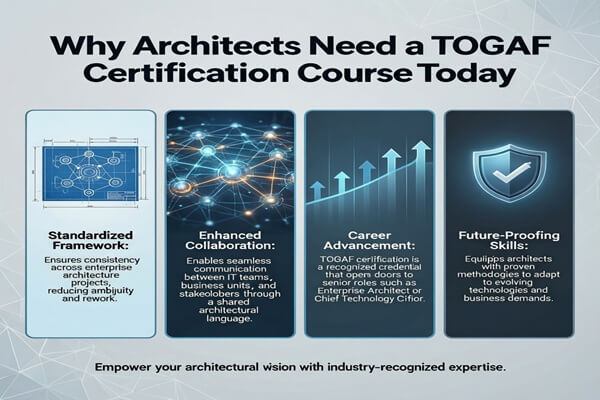
Furthermore, TOGAF creates a common architectural language that enhances communication between architects, business stakeholders, and IT teams. This shared vocabulary is invaluable when coordinating complex transformation initiatives across multiple departments and geographies.
Key Benefits of TOGAF Certification
Professionals who complete a TOGAF Certification Course gain several distinct advantages in their careers:
Industry Recognition: TOGAF certification is globally recognised, demonstrating expertise in proven enterprise architecture practices. Employers across industries actively seek certified professionals to lead their strategic technology initiatives.
Enhanced Decision-Making: The framework provides structured approaches for evaluating technology choices, managing portfolios, and aligning IT strategies with business priorities. Certified architects make informed decisions that drive organisational success.
Career Advancement: Enterprise architects with TOGAF credentials command competitive salaries and access to senior leadership positions. The certification validates competency in a discipline that organisations increasingly value.
Adaptability: TOGAF’s modular and scalable framework can be tailored to various organisational contexts. Whether implementing cloud transformations, cybersecurity enhancements, or agile methodologies, certified architects possess the flexibility to address diverse challenges.
Rising Demand in India’s Technology Sector
India’s rapidly growing technology ecosystem has created substantial demand for qualified enterprise architects. Major corporations and innovative startups alike require professionals who can design robust architectures supporting digital initiatives. Consequently, TOGAF Training in Chennai has witnessed significant growth as professionals recognise the certification’s career-enhancing potential.
Chennai, as one of India’s leading IT hubs, hosts numerous multinational corporations and technology companies requiring skilled architects. Professionals pursuing TOGAF Training in Chennai gain access to quality instruction while positioning themselves for opportunities within the city’s thriving technology sector.
The certification prepares architects to address real-world challenges faced by Chennai’s diverse industries, from banking and financial services to manufacturing and healthcare. Organisations across these sectors are actively seeking TOGAF-certified professionals to guide their digital transformation journeys.
Future-Proofing Your Career
As technology continues to evolve, architects must continuously update their skills to remain relevant. A TOGAF Certification Course provides foundational knowledge that adapts to emerging trends. The framework’s emphasis on governance, stakeholder engagement, and strategic alignment ensures that certified professionals can navigate whatever technological changes lie ahead.
Moreover, TOGAF certification does not expire, though continuous learning is encouraged to stay current with evolving best practices. This lifetime validity makes the certification a lasting investment in professional development.
Conclusion
In an era defined by digital disruption, enterprise architects play an indispensable role in guiding organisations through complex transformations. A TOGAF Certification Course provides the structured methodology, industry recognition, and practical skills needed to excel in this critical discipline. For professionals seeking to advance their careers and make meaningful contributions to organisational success, investing in TOGAF certification is a strategic decision that delivers enduring value.